
FDA’s Proposed Front-of-Package (FOP) Nutrition Labeling

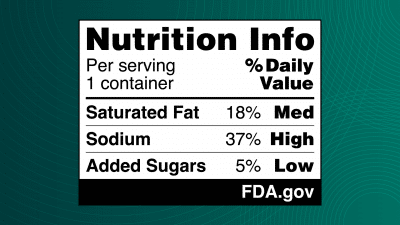
In January of 2025 the FDA proposed a rule to require most packaged foods to add a specific front-of-package (FOP) nutrition label that includes low/medium/high ratings for saturated fat, sodium, and added sugars. They extended the initial comment period from May 2025 to July 2025, but as of May 2026 the rule is still in the proposal stage with no enforcement date attached.
The current proposal exempts small packages (those under 12 square inches) and dietary supplements.
What is the goal?
The FDA and similar agencies around the world want packages containing certain ingredients to be marked more clearly than the existing back/side panel nutrition label as a warning to consumers. The FDA’s proposal includes saturated fat, sodium, and added sugars. Manufacturers will need to mark each item low, medium, or high based on the percentage of the recommended Daily Value.
Officially, “to provide accessible, at-a-glance information to help consumers quickly and easily identify how foods can be part of a healthy diet.”
What do other countries do?
Canada, Mexico, almost all of South America, Thailand, Iran, Singapore, and other countries already mandate such disclosures. The European Union, China, Australia, and others have guidelines for food companies to use such labeling on a voluntary basis. Canada requires a black-and-white box similar to the on the FDA has proposed, noting when the product is high in one of these nutrients. Mexico and South American countries largely use black octagonal warning labels that look like stop signs. Some countries include not only these three nutrients but calories and total fat as well.
What are the concerns?
According to public comments, some of the top concerns include
- Prohibitive cost of new label plates for small to medium businesses
- Objections to the language-heavy design of the proposed label rather than graphics that can communicate more clearly to people who speak different languages
- Reducing sodium to appear differently on the label may affect products’ shelf life
- Currently undefined details such as the required size of the label and whether fruit juices will be classified as added sugars
- A preference for highlighting nutrients to encourage (such as protein or fiber) rather than those to discourage
- Proposals for alternative displays and/or rating systems
- Questions about whether nuts, seeds, or soy products will be marked as high in saturated fat when they are demonstrably part of a healthy diet
- Objections to repeating information from the existing nutrition info panel
When will this rule change happen?
As of May 2026 it is unknown when or if this rule change will go into effect. If it is enacted, the proposal includes allowing larger companies (those with >$10 million in revenue) three years to comply, and smaller companies (<$10 million) four years. The FDA has not announced whether it will adopt this proposed rule and set an enforcement date.
While some countries have regulations about voluntary disclosure of FOP labels like this, the US has not formalized any guidelines for voluntary labeling.
We can help
Whether you are looking to update your current labels/packaging or keep the style you love, we’d be happy to help. Contact us today to speak with a packaging expert about your labels, folding cartons, stand-up pouches, or other flexible packaging options.